
When Little Hearts Grieve: Helping Children Navigate Loss
When someone we love dies, the question that haunts most parents is a simple one: What do I say to my child?
We worry about saying too much. We worry about saying it wrong. We want to protect them, and so we soften the truth: "Grandpa has gone to a better place," "Mummy went to sleep and didn't wake up," "We lost him." We mean well. But children are perceptive, and what we leave unsaid does not go unfelt. They sense the grief in the air, the hushed phone calls, the tearful adults. The question is never whether they will grieve. It is whether they will have to grieve alone.
The most important thing research (and parents who have walked this road) consistently tells us is this: address it directly, honestly, and without disappearing behind euphemisms. Children can bear hard truths. What they struggle far more to bear is confusion, silence, and the feeling that something terrible is happening that no one will name.
This article is a guide for parents and caregivers who want to do right by the children in their lives. Not a perfect guide, but a grounded, compassionate one.

What Children Understand About Death (And When)
Children understand and experience death shifts with age and development, and what helps a three-year-old is different from what helps a twelve-year-old or a teenager. Knowing where your child is developmentally helps you meet them there.
Ages 0–6: The World Is Magical
Young children think in magical, concrete terms. They do not yet grasp that death is permanent, universal, or inevitable. A five-year-old who is told that Grandma has "passed on" may ask cheerfully the following week when she is coming back. Not because they did not hear you, but because their minds cannot yet hold the concept of forever.
This is why clear language matters so much at this age. Say died. Say dead. "Grandma died. That means her body stopped working and she will not come back." It may sounds blunt, but it is far kinder than an explanation that leaves a child wondering what really happened.
Expect magical thinking: the belief that wishing hard enough, or being good enough, might bring the person back. Expect repeated questions, not because they forgot your answer, but because they are slowly absorbing a reality too big for them to take in all at once. Expect regression: bedwetting, clinginess, sleep disturbances, and playing out death-related themes in imaginative games. This last one can be alarming to witness, but it is actually healthy. Play is how young children process what they cannot yet put into words.
One of the most important insights from research on bereaved parents (Lytje & Dyregrov, 2021) is that families who kept things hidden, even with the best intentions, often found their children felt betrayed later. Families who talk openly found it created a culture of trust and laid the foundation for healthy grieving together.
Ages 6–12: Beginning to Understand Permanence
By around age six or seven, children begin to grasp that death is permanent, that all living things die, and eventually (sometimes frighteningly) that they will die too. With this understanding often comes a wave of anxiety and a hunger for facts: What happens to the body? Will I die? Who will look after me?
A particular watchpoint at this age is guilt. Children this age are still partly magical thinkers, and they may quietly wonder whether something they did or said caused the death. "Is it because I didn't go to school that day? Did I make Daddy sick because I was naughty?" These thoughts are rarely voiced unless an adult creates space for them. The Harvard Child Bereavement Study specifically names reassurance that they are not to blame as one of the core needs of bereaved children, not because guilt is universal, but because it is common enough that it must be actively addressed.
Grief at this age can also look deceptively mild. A child may cry for a few minutes and then ask to go and play. This is not coldness; it is developmental. Children this age can only hold the pain in small doses, and play is a genuine and important way of coping. A parent who sees this and concludes "she seems fine" may miss the quieter signs: trouble concentrating at school, physical complaints, withdrawal from friends, or becoming a silent helper who suppresses their own sadness to protect the grieving adults around them.
Teenagers: Grief Without a Road Map
Adolescents have adult-level cognitive understanding of death, but they are processing it through the storm of identity formation, peer belonging, and intense emotion. They may grieve in ways that look like withdrawal or defiance: pulling away from family, seeking distraction through friends or screens, swinging between emotional outbursts and apparent indifference. They may resist family rituals that feel forced or performative.
What matters most for teenagers is that they feel neither pushed out of grief nor pushed into it. They need the door left open, not held open for them. They may need to grieve on their own terms, through music, art, writing, or physical activity, rather than through conversation. Research suggests that grief experienced in adolescence can have long-reaching effects across the lifespan, making ongoing, low-pressure support especially valuable.
Watch carefully for signs that go beyond grief: prolonged isolation, sudden changes in academic engagement, substance use, or any hint (however passing) of not wanting to be alive. These deserve immediate, compassionate attention.
What You Can Do as an Adult
Be Honest and Clear
Use the words died and death. Avoid euphemisms like "gone to sleep," "passed away," "we lost him," or "gone to a better place." These are well-intentioned but can genuinely confuse young children and, in some cases, create new fears (if sleep means death, bedtime becomes terrifying). Say the person's name. Allow the reality to be real.
Invite Questions, and Sit With the Ones You Cannot Answer
Children need to know that their questions are welcome, including the difficult ones. "What happened to his body?" "Is it painful to die?" "Will you die too?" These deserve honest, age-appropriate answers, and honest uncertainty where that is all you have. "I don't know exactly, but I believe..." is a perfectly valid answer. What matters is that you do not shut the question down, nor dismiss or judge the child for the questions.
Watch for Guilt and Address It Directly
With children in the 6–12 age range especially, do not wait for guilt to surface. Name it proactively: "Sometimes children wonder if something they did caused someone to die. That is never true. Nothing you did or thought or said made this happen." Saying it once is not enough. Say it again when they seem burdened.
Keep Daily Routines
Grief is destabilising. The reliable structure of mealtimes, school, bedtime rituals, and weekly rhythms is not a way of pretending nothing happened. It is the scaffolding of safety that allows children to process loss without feeling like their whole world has dissolved. Normalcy and grief can coexist.
Ask Children What They Want
Here is something many parents, and in the Asian context many families, do not do: ask the child.
When a death occurs, adults tend to make decisions on behalf of children without consulting them. "She's too young to attend the wake." "He won't understand what's going on." "We don't want to upset her." These decisions come from love. But they often leave children on the outside of something that deeply concerns them. The death of someone they loved. And they are left with no agency, no voice and no closure.
In many Asian families, there is a strong cultural instinct to protect children by keeping them away from the rituals altogether. Children are sent to a relative's home during the wake, kept home from the funeral, or simply not told what is happening until it is over. The adults decide. The children comply.
But children are not fragile in the way we fear. And being excluded from the rituals of farewell can be more distressing than being included. It leaves children with unanswered questions, a death they cannot make real in their minds, and the isolating message that their grief does not belong in the family's grief.
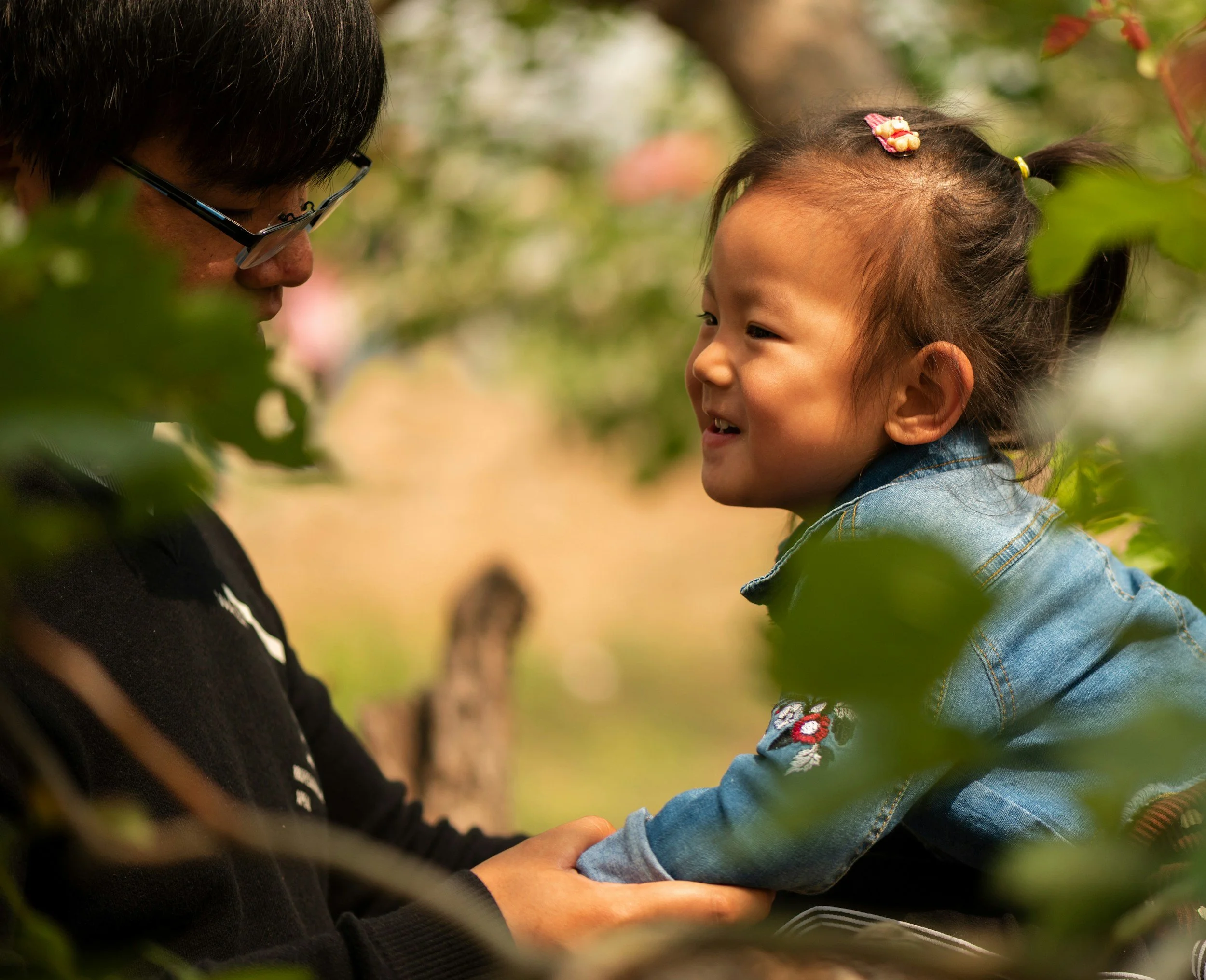
The research is clear on this. A qualitative study by Søfting, Dyregrov and Dyregrov (2016), which interviewed children about their experience of viewing deceased family members, found that inclusion in farewell rituals was crucial for children. It helped them feel recognised as grievers alongside adults, not invisible bystanders. In contrast, children who were excluded sometimes struggled longer with the permanency of the loss, continuing to ask when the parent was "coming back" long after the death. Attendance at funerals and wakes, when handled with preparation and care, gives children closure, belonging, and a shared memory to carry.
The key is not to decide for them, but to prepare them and ask. Tell the child, in simple language, what will happen: where you are going, what it will look like, who will be there, what people might be doing. Let them know it is okay to feel sad, or scared, or even nothing at all. Then ask: "Would you like to come?" Give them a small role if they want one, such as holding flowers, or lighting a candle. And let them know they can step outside whenever they need to.
The goal is not to force a child into grief. It is to make sure they are not locked out of it.
Create Space for Expression Beyond Words
Not every child will grieve through conversation, and that is entirely normal. Art, music, movement, and play are legitimate and often more accessible channels for processing grief, especially for younger children and teenagers. Drawing pictures of the person who died, creating a memory box, writing a letter, planting something in the garden: these rituals of remembrance do not need words to be powerful.
The Harvard Child Bereavement Study lists among children's core bereavement needs the validation of feelings, including respect for and safe ways to express individual reactions in their own ways, and opportunities to remember both after a death and throughout life. How children express and remember matters less than that they have space to do both.
Model Grief: Let Them See You Feel It
One of the most powerful things an adult can do is let a child see them grieve. It sounds counterintuitive. We instinctively want to be strong, to hold it together, to protect our children from the sight of our own pain. But when we grieve only behind closed doors, we send an unintended message: that grief is something shameful, too dangerous to be seen.
Children learn how to grieve by watching the adults they trust. When a parent says, "I'm feeling very sad today because I miss Grandma, and it's okay to feel that way," they do several important things at once. They name the feeling. They connect it to the person who died, keeping that person present. And they show, by their own example, that sadness can be felt and survived. This is what the Harvard Child Bereavement Study calls modelled grief behaviours, one of the ten core needs of bereaved children.
This does not mean falling apart in front of your child or burdening them with the full weight of adult grief. It means allowing honest, manageable moments of feeling to be visible. Tears at a memory. Saying "I miss him" out loud. Pausing at a photograph. These small acts of authentic grieving give children permission to do the same.
The Lytje and Dyregrov study (2021) found that families who grieved openly, who talked about the person who died, kept their memory alive, and did not pretend, consistently looked back and felt it had been the right approach. Not one of them regretted it.
Take Care of Yourself
A parent/caregiver who is completely overwhelmed and unable to function cannot adequately support a grieving child. The same openness you offer your child, offer yourself: seek support through counselling, a grief group, or trusted community. This is not selfish. It is one of the most important gifts you can give the children in your care. You cannot pour from an empty vessel, and your children need you present, not just physically but emotionally.

Books to Read With Children
Books are one of the gentlest ways to open a conversation about death with a child. The story holds the feeling, so neither of you has to hold it alone. For thoughtfully curated, age-by-age book recommendations to support children across different types of grief, go to
https://maistorybook.com/2025/08/30/helping-children-navigate-loss-picture-books-for-national-grief-awareness-day/
Books for Adults Supporting Bereaved Children
The following titles are widely cited by professionals working with bereaved children and are worth having on your shelf as a parent, teacher, or caregiver:
Schaefer, D. & Lyons, C. (2010). How Do We Tell the Children? A Step-by-Step Guide for Helping Children Two to Teen Cope When Someone Dies
Grollman, E.A. (2011). Talking About Death: A Dialogue Between Parent and Child. Includes a passage to read with a child and guidance for answering their questions.
Goldman, L. (2009). Great Answers to Difficult Questions: What Children Need to Know
Online Resources
The Dougy Center (dougy.org) One of the world's most trusted grief support organisations for children and families, with extensive free downloadable guides, activity sheets, and resources for different ages and types of loss.
What's Your Grief (whatsyourgrief.com) A comprehensive, accessible website with articles, activities, and tools for grieving individuals and those supporting them, including dedicated sections on supporting children.
Winston's Wish (winstonswish.org) A UK-based charity with excellent online resources for bereaved children and the adults who support them, including school-related guidance.
A Final Word
There is no script for this. There is no way to say the perfect thing or to shield a child entirely from the pain of loss because grief met honestly is how we learn to love across the distance that death creates.
What children need most is not perfect answers. They need to know that the adults in their lives will not crumble when they ask hard questions. They need honesty, age-appropriate and offered with gentleness. They need permission to feel what they feel, and to keep feeling it, in whatever form it takes, for as long as it needs to.
If you are walking alongside a grieving child right now, the very fact that you are looking for ways to do this well tells you something important: you are already the adult they need.